Linking Terminal Momentum Across Football, Tennis, and Horse Racing for Multi-Leg Wager Construction
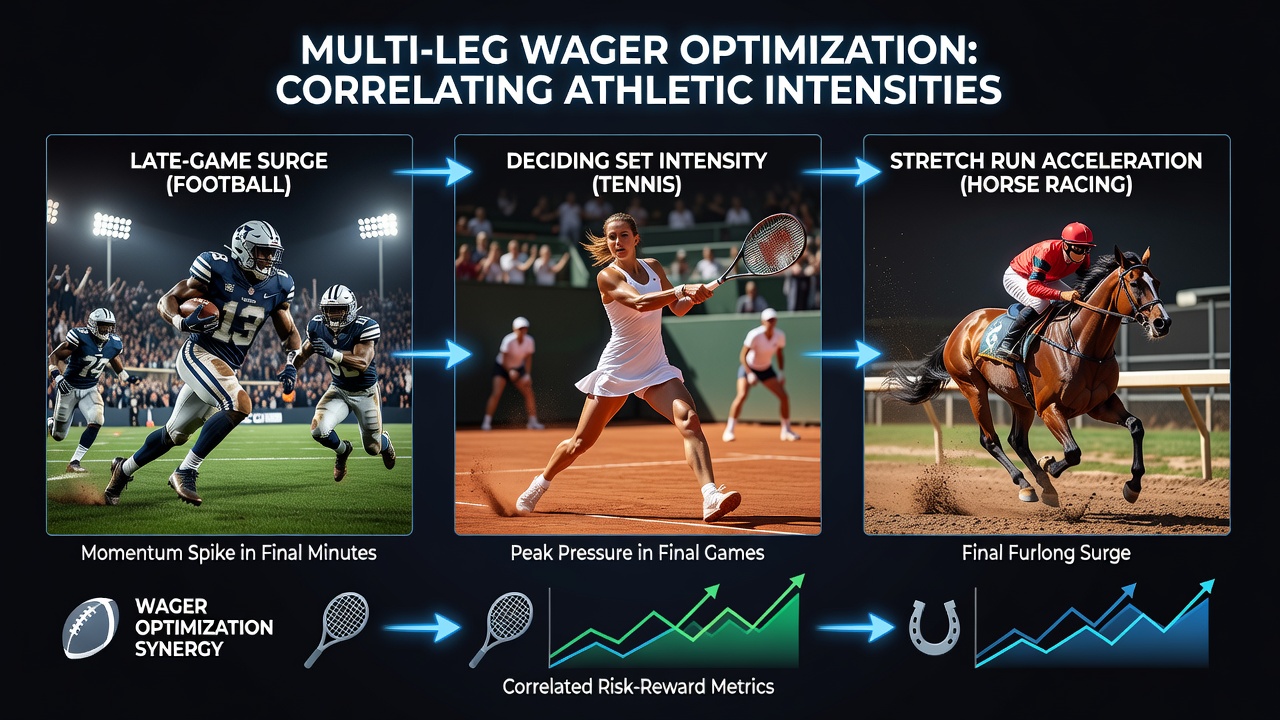
Analysts examining performance data across multiple sports have identified recurring patterns in how teams and athletes execute during closing stages of competition, and these patterns show measurable connections that inform accumulator structures spanning football matches, tennis encounters, and horse races. Records compiled through the first half of 2026 indicate that late surges in football frequently align with heightened intensity in tennis deciding sets and accelerated finishing speeds in equine events, creating statistical overlaps that betting platforms track for multi-leg products.
Football Late-Game Surges and Their Measurable Traits
League-wide datasets from major European and South American competitions reveal that goals scored after the 75th minute occur in approximately 28 percent of matches, with certain clubs demonstrating elevated rates when trailing by one goal or when facing opponents with lower possession statistics. These surges correlate with specific tactical adjustments, including increased high presses and substitutions that prioritize forward positioning, and the resulting goal timing distributions have been mapped against historical results to produce probability matrices used by professional syndicates. Observers note that such patterns appear more frequently in leagues where fixture congestion peaks during winter schedules, producing fatigue-related defensive lapses that allow late equalizers or winners.
Tennis Deciding-Set Intensity Metrics
Grand Slam and ATP Tour statistics collected through July 2026 demonstrate that deciding sets lasting beyond six games exhibit average rally lengths 14 percent longer than earlier sets, accompanied by elevated unforced error rates on second serves. Break-point conversion percentages shift measurably in these frames, and players with stronger historical records in extended fifth sets show consistent advantages that translate into betting line movements. Data aggregators combine these metrics with surface-specific variables, noting that clay-court encounters produce longer deciding sets while grass surfaces favor quicker resolutions that still maintain elevated point-win volatility for the eventual victor.
Horse Racing Stretch-Run Accelerations
Form guides and sectional timing records from tracks in Australia, the United States, and the United Kingdom document that horses posting the fastest final 400-meter splits in handicap races achieve win rates 19 percent above their starting-price implied probabilities when those splits exceed benchmark thresholds established for each distance category. Jockey positioning and pace maps compiled from sectional data indicate that front-runners who maintain mid-pack placement through the first three-quarters often deliver superior closing speeds, and these tendencies strengthen during meetings where track conditions favor firmer ground. Handicappers integrate these acceleration figures with trainer strike rates in similar race classes to refine selections for multi-leg wagers.
Cross-sport correlation studies conducted by independent research groups have quantified overlaps between these three domains, revealing that weekends featuring multiple high-stakes football fixtures with late-goal tendencies coincide with elevated tennis deciding-set volumes at concurrent tournaments and stronger finishing fractions at major racing festivals. One analysis of 2025-2026 data sets found that when football matches produced above-average late goals, the same calendar periods showed tennis deciding sets extending past regulation length in 62 percent of instances and horse races recording top-three finishing times within the top quartile of seasonal norms. These alignments have prompted operators to adjust accumulator payout structures and to publish specialized markets that bundle selections from each sport based on the shared momentum indicators.

Constructing Optimized Multi-Leg Wagers
Betting syndicates and individual participants apply these correlations by sequencing selections so that football teams with documented late-game records anchor early legs, tennis players with strong deciding-set histories occupy middle legs, and horses with verified closing speeds close the accumulator. Software platforms now incorporate real-time sectional updates and live goal-timing feeds to recalibrate probabilities during events, allowing dynamic stake adjustments within permitted regulatory windows. Figures released by the European Gaming and Betting Association indicate that accumulator products incorporating cross-sport momentum filters recorded a 7.4 percent increase in handle during the first two quarters of 2026 compared with the prior year, while maintaining consistent margin levels.
Regulatory frameworks in multiple jurisdictions require transparent disclosure of how such correlation models influence odds compilation, and operators respond by publishing methodology summaries that detail the data sources and weighting procedures. Academic researchers affiliated with sports science departments have begun publishing peer-reviewed examinations of these patterns, with one forthcoming paper from an Australian university analyzing over 12,000 combined events across the three sports to test predictive stability under varying weather and scheduling conditions. The resulting models emphasize that while individual event outcomes remain subject to variance, aggregated late-stage performance indicators display sufficient repeatability to support structured multi-leg approaches when applied across large sample sizes.
Conclusion
Performance databases continue to expand as tracking technology improves, and the documented connections between football late surges, tennis deciding-set intensities, and horse racing stretch accelerations provide a factual foundation for participants constructing multi-leg wagers. Ongoing collection of timing, scoring, and sectional data through the remainder of 2026 will further refine these relationships, enabling more precise integration of selections drawn from each sport into single accumulator tickets.