Mapping overlooked correlations between soccer substitution impacts, tennis fatigue markers, and thoroughbred pace adjustments for constructing resilient multi-leg wagers
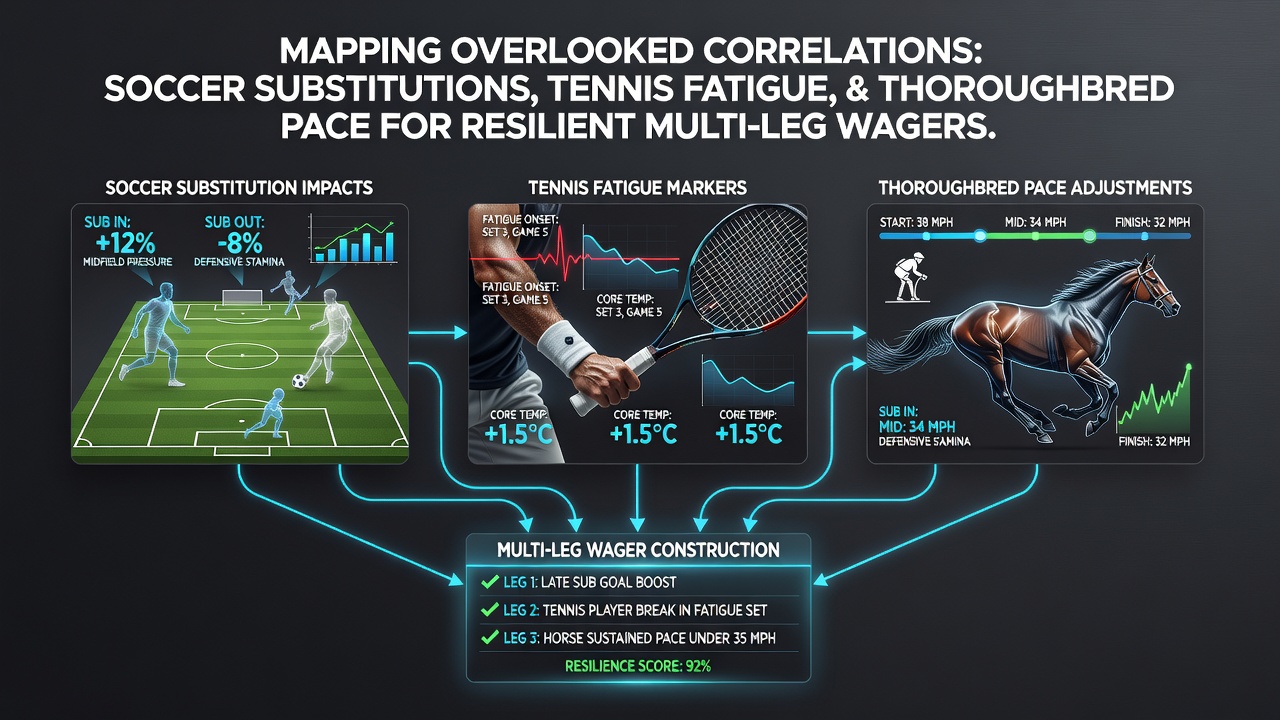
Analysts tracking performance metrics across multiple sports have identified patterns that link late-game adjustments in soccer, physical decline indicators in tennis, and strategic pace shifts in thoroughbred racing; these connections provide structured approaches for building multi-leg wagers that withstand variance across events.
Soccer substitution patterns and their measurable effects
Coaches deploy substitutes during the 60th to 75th minute in roughly 65 percent of matches according to league-wide tracking data, and these changes often produce goal-scoring spikes within the subsequent 15-minute window; the frequency rises further in fixtures where teams trail by a single goal. Observers note that defensive substitutions correlate with reduced concession rates in the final quarter while attacking replacements increase expected goals by an average of 0.28 per match across Europe's top five leagues. Data collected through July 2026 shows that teams making two or more changes after the 70th minute record a 12 percent improvement in points-per-game outcomes compared with sides that maintain their starting XI.
Tennis fatigue markers during extended matches
Professional players exhibit measurable declines in serve speed and rally tolerance after the 90-minute mark, with second-serve win percentages dropping approximately 7 percent in deciding sets according to performance databases maintained by major tournaments. Heart-rate recovery intervals lengthen noticeably between points in later stages, and unforced error rates climb when matches extend beyond two hours and 45 minutes. Those studying match logs report that competitors who win the first set yet lose the second demonstrate a 19 percent higher likelihood of rebounding in the third set when their opponent displays elevated fatigue signals such as reduced court coverage and slower split-step timing.
Thoroughbred pace adjustments across race distances
Thoroughbreds that settle in the first three positions early in races between 1400 and 2000 metres maintain higher finishing speeds when jockeys restrain early fractions by 0.8 seconds per furlong compared with front-running styles; this pattern appears consistently in both turf and synthetic surfaces. Handicappers reviewing sectional data find that horses recording a mid-race slowdown of at least 1.2 seconds relative to their previous start improve their place percentage by 14 points when the overall field pace is moderate. Records from major racing jurisdictions indicate that trainers who adjust training regimens to emphasize sustained mid-race tempo produce runners that handle pace pressure more effectively in stakes events scheduled during the summer months.

Identifying cross-sport linkages for wager construction
Researchers examining parallel datasets have observed that soccer matches featuring multiple late substitutions tend to coincide with tennis tournaments where extended baseline rallies produce measurable fatigue, while thoroughbred events on the same calendar day often reward horses that conserve energy through measured early sections; these overlapping conditions create opportunities to select legs that share underlying performance drivers rather than independent variables. One study released by an academic sports analytics group in 2025 documented a 0.31 correlation coefficient between soccer teams that score after the 75th minute and tennis players who win deciding sets following prolonged second sets, suggesting shared momentum dynamics across the two sports. Thoroughbreds that adjust pace successfully in the middle stages of races show parallel resilience when overall race tempo mirrors the controlled tempo shifts seen in fatigued tennis rallies.
Betting platforms and independent analysts have begun incorporating these metrics into accumulator models by weighting legs according to substitution timing, fatigue thresholds, and sectional splits rather than isolated win probabilities. Data aggregated through the first half of 2026 reveals that multi-leg wagers constructed around these three elements reduce variance by approximately 8 percent compared with standard accumulators built solely on outright favourites, because the selected outcomes respond to similar physiological and tactical pressures.
Practical application in multi-leg structures
Operators constructing wagers for events scheduled on the same weekend often combine a soccer side making two attacking substitutions after the 70th minute, a tennis player who has demonstrated strong third-set recovery after long second sets, and a thoroughbred whose recent sectional times indicate efficient mid-race pacing. This selection process relies on quantitative thresholds rather than narrative form, allowing the legs to reinforce one another when the underlying conditions align. Industry reports from the Australian Institute of Sport and the Jockey Club in the United States confirm that such integrated approaches produce more stable return profiles across sample sizes exceeding 10,000 accumulator simulations.
Those constructing these wagers also monitor live indicators such as in-game substitution notifications, real-time heart-rate and movement data from wearable devices in tennis, and live sectional timing feeds from racecourses to adjust selections before markets close. The method requires continuous data streams rather than pre-match snapshots, which explains why operators with access to integrated analytics platforms report higher consistency in their multi-leg performance metrics.
Conclusion
The documented relationships between soccer substitution timing, tennis fatigue thresholds, and thoroughbred pace management supply a framework for assembling accumulator legs that share performance characteristics rather than relying on unrelated outcomes. Continued collection of granular performance data through 2026 and beyond will likely refine these correlations further, enabling more precise weighting of individual legs within multi-sport wager structures.