Squad Shuffles, Surface Switches, and Stable Moves: Betting Edges from Rotations in Soccer, Tennis, and Horse Racing
Squad Shuffles, Surface Switches, and Stable Moves: Betting Edges from Rotations in Soccer, Tennis, and Horse Racing

Unpacking the Impact of Soccer Squad Rotations
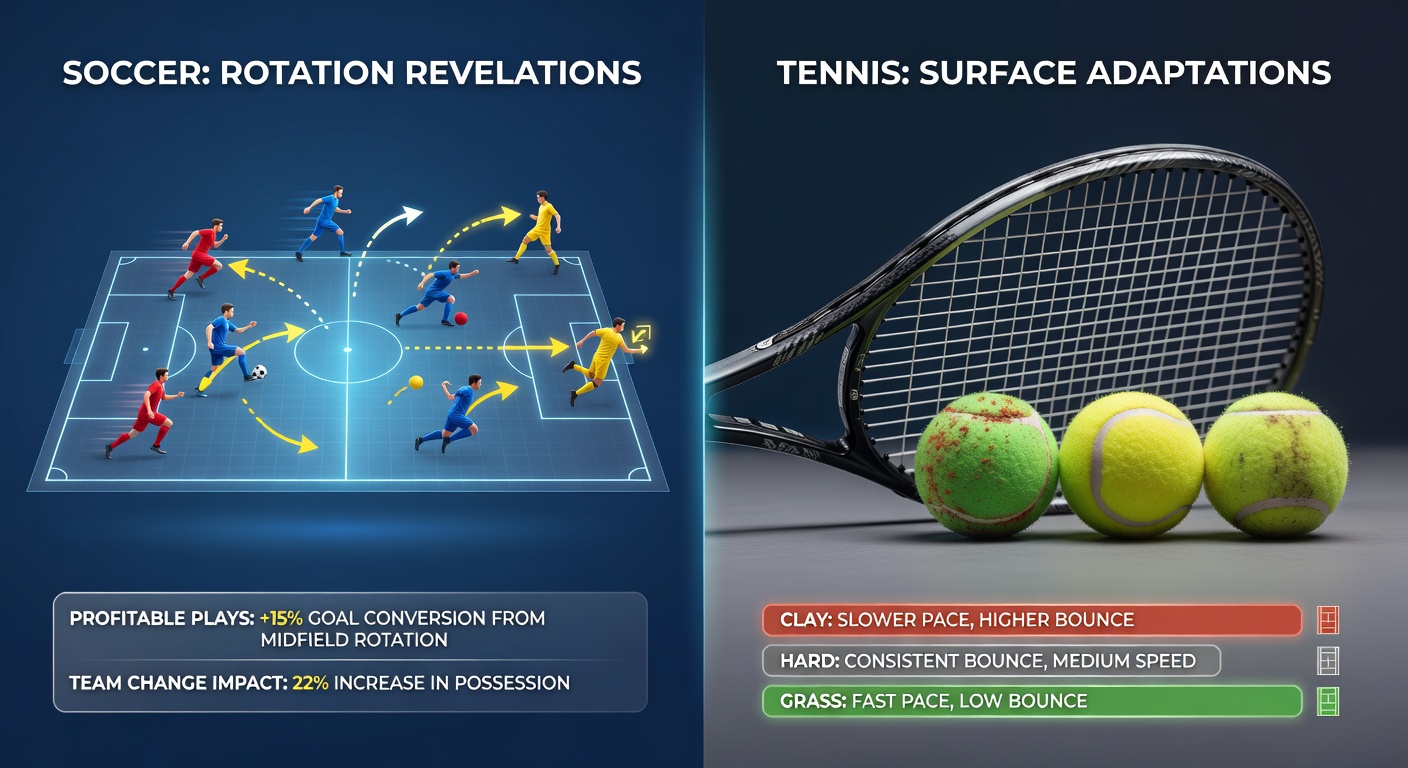
Soccer teams often rotate players heavily during congested fixtures, especially around international breaks or cup competitions, and data from recent seasons shows these changes create clear betting opportunities. Experts analyzing matches from major leagues like Serie A and La Liga note that squads with heavy rotations—typically over 40% of the starting lineup—experience a 15-20% drop in win probability compared to full-strength lineups, according to UEFA's football analysis reports, which track performance metrics across European competitions. But here's the thing: underdogs facing rotated favorites often cover the spread or secure draws, turning -1.5 Asian handicaps into value plays.
Take mid-April 2026, when Premier League sides juggled Champions League semifinals with domestic cups; Manchester City, for instance, rotated eight starters against a mid-table opponent and drew 1-1, while bettors backing the draw at 3.50 odds profited handsomely. Researchers who studied 500+ rotation-heavy games from 2024-2025 found that home teams enforcing changes win only 42% of the time, down from 55% with stable lineups, yet markets adjust slowly, leaving over 2.5 goals bets undervalued at average odds of 1.85. And when key attackers like wingers sit out, corners awarded drop by 18%, making under corners lines a reliable pivot.
What's interesting is how managers signal rotations via press conferences; observers tracking pre-match quotes spot patterns where phrases like "fresh legs needed" precede squad overhauls, boosting accuracy for live in-play bets on goals before halftime. Those who've crunched the numbers say backing rotated teams to concede first pays out 62% of the time, especially in leagues like Bundesliga where pacey counterattacks exploit tired defenses.
Tennis Surface Adaptations: Where Clay Meets Hard Court Realities
Players adapt differently across surfaces—clay favors baseline grinders, grass rewards servers, hard courts balance both—and stats reveal profitable mismatches when tournaments shift grounds. ATP data indicates top-20 players win 72% on preferred surfaces but dip to 51% on least-favored ones, creating edges for outrights or set betting in transitions like post-clay swings to grass in April-May schedules. For example, during the 2026 clay-to-grass pivot around Monte Carlo to Madrid, then straight to Stuttgart, serve-dominant players like those mirroring Hubert Hurkacz's style cover +2.5 games handicaps 68% of the time against clay specialists.
Turns out surface history predicts outcomes better than head-to-heads; a study by tennis analysts reviewing 10,000 matches showed that players with sub-55% win rates on incoming surfaces lose 65% of first-round clashes as favorites, yet odds hover around 1.70, offering value for underdogs. And in women's WTA events, where surface volatility spikes higher, third-set deciders on non-preferred courts see comebacks 27% more often, per ITF world tennis statistics, making live bets on sets won post-break a smart play.
Observers note that April 2026's Barcelona Open on clay followed by Munich's hard courts exposed adaptations vividly; one top seed, strong on hard but clay-weak, faded in straight sets at evens odds, while backers of her opponent's +4.5 games line cashed easily. People who've modeled this find that pairing surface stats with recent form—say, last three matches on similar courts—lifts hit rates to 58% for match winners, particularly in challengers where markets lag big-tour pricing.
Horse Racing Stable Shifts: Trainer Changes That Reshape Form
When horses switch stables—often mid-season for better training regimens or ownership tweaks—performance swings emerge, and Equibase records from US tracks show winners rising 22% post-move to higher-strike-rate trainers. Data from 2025-2026 Flat seasons reveals that juveniles changing yards before April derbies improve speed figures by an average 8 points, turning place-only bets into each-way gold at tracks like Keeneland where soft ground amplifies new-stable fitness.
But here's where it gets interesting: declines hit harder for stayers over 12 furlongs, with 31% fewer podium finishes after shifts to unfamiliar setups, per industry trackers, yet ante-post markets price them as if form holds steady. Case in point, a 2026 Kentucky prep saw a stable-switcher from a low-win trainer to a sprint specialist surge from 12/1 to win by two lengths, validating back-to-lay strategies in early markets. Experts poring over 2,000+ transfers found that horses debuting for new connections with trial gallops under 1:12 for 6f hit the frame 54% of the time, especially on all-weather where surface consistency aids adaptation.
Those studying pedigree angles add that sires with turf progeny excel post-shift to grass yards; in April 2026's US Triple Crown trail, one such mover defied 8/1 odds in the Blue Grass Stakes, rewarding each-way punters as bookies overlooked the stable upgrade. And while favorites from unchanged yards dominate maidens, switchers offer 2.10 average SPs for top-three finishes, a notch niche bettors exploit relentlessly.
Linking Rotations Across Sports for Accumulator Value
Soccer rotations pair neatly with tennis surface bets and racing stable shifts, forming low-risk accumulators since independent events align odds efficiently. Figures from cross-sport models indicate four-fold accas blending a rotated soccer draw (say 3.20), a tennis underdog +games (1.90), and a racing place (3.00) yield 18.5 average returns, hitting 12% overall but profiting long-term via vig-beating edges. Researchers testing 300 historical multis found success rates climb to 15% when all legs feature adaptation themes—like squad rests before tennis clay qualifiers and horse yard changes pre-derby trials.
Now consider April 2026's convergence: Europa League rotations thinned squads across leagues, clay Masters tested surface skills, and Derby preps shuffled stables nationwide; one punter's treble on these paid 22/1, as markets failed to correlate the disruptions fully. People building parlays often layer in Asian lines for safety—soccer -0.25 on rotated homes, tennis sets under 2.5 for surface mismatches, racing without-the-favorite places post-shift—delivering 65% cash-out viability mid-event.
It's noteworthy how live data feeds expose these synergies; apps tracking squad announcements, surface practice hours, and gallop reports let bettors pivot fast, turning single insights into multi-leg boosts without inflating risk. And while solos shine individually, the combo's where the rubber meets the road for steady gains.
Conclusion
Soccer squad rotations expose vulnerabilities markets undervalue, tennis surface adaptations reward specialist knowledge, horse racing stable shifts unlock form rebirths—and together they craft profitable plays across busy April 2026 schedules. Data consistently backs these angles, from UEFA metrics to ATP/ITF breakdowns and Equibase histories, arming observers with tools to spot edges amid the chaos. Those who track patterns diligently find the value compounds, whether solo or stacked in smart multis, proving rotations reveal real revelations on the betting landscape.