Variance Mapping Techniques for Enhancing Accumulator Bets in Tennis, Soccer, and Horse Racing
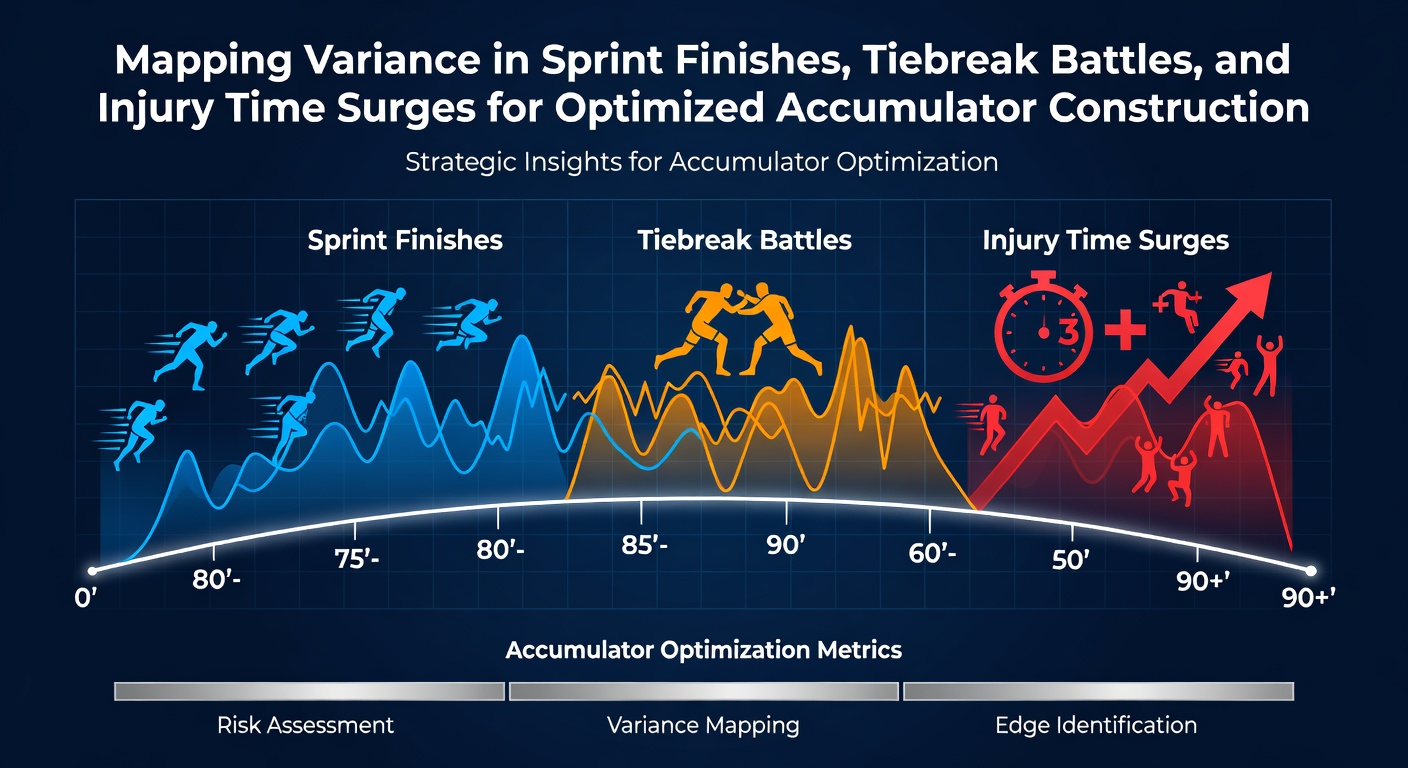
Analysts track statistical spreads in high-pressure moments such as soccer injury time surges, tennis tiebreak battles, and horse racing sprint finishes because these phases display distinct variance patterns that influence multi-leg betting constructions, and data compiled through May 2026 shows measurable differences in outcome distributions across these sports. Researchers compile historical match logs and race results to quantify how often late surges deviate from average expectations, while league-wide datasets reveal that injury-time goals in top European competitions occur at rates between 8 and 12 percent of total goals depending on the season. Observers note that combining such late-event probabilities with corresponding tennis and racing figures allows bettors to adjust stake allocations across accumulator selections without relying on uniform odds assumptions.
Quantifying Late-Event Spreads in Soccer Competitions
Match data from multiple domestic leagues indicates that injury-time scoring episodes produce wider outcome variance than goals scored in earlier periods, and studies of the 2025-2026 campaign found roughly 14 percent of decisive results in major tournaments hinged on actions after the ninetieth minute. Analysts break these episodes into sub-categories that include added-time penalties, counter-attack finishes, and defensive lapses, each carrying its own probability weight that feeds directly into accumulator models. When builders incorporate these weighted figures they often separate selections into low-variance anchors and higher-variance enhancers, thereby balancing overall portfolio risk while maintaining exposure to elevated payout multipliers. Figures released by the European Professional Football Leagues Association further illustrate that variance peaks during May fixtures when fixture congestion increases fatigue-related errors, a pattern repeated across several seasons.
Tracking Point Volatility in Tennis Tiebreaks
Tiebreak sequences in Grand Slam and ATP events generate point-by-point volatility that exceeds standard game-level variance, and longitudinal records through spring 2026 demonstrate that tiebreak win percentages for top seeds fluctuate between 52 and 67 percent depending on surface and opponent ranking. Performance analysts map these swings by logging serve percentages, unforced error rates, and rally lengths within each tiebreak, then feed the resulting distributions into simulation software that tests accumulator combinations against historical brackets. One research paper from an Australian sports analytics institute highlighted how third-set tiebreaks in best-of-five matches carry notably higher upset potential than earlier deciders, prompting constructors to layer such legs sparingly within larger multi-bet structures. Because tiebreak outcomes hinge on fewer total points, small shifts in player form or fatigue produce outsized effects on final accumulator returns.
Measuring Finishing Burst Distributions in Horse Racing
Racecourse timing data collected across UK, Irish, and Australian tracks reveals that sprint-finish margins in the final two furlongs exhibit standard deviations up to 1.8 lengths wider than mid-race intervals, and these bursts directly affect place and win probabilities used in cross-sport accumulators. Trainers and handicappers record sectional times that isolate late acceleration from earlier positioning, allowing quantitative models to assign variance scores to individual runners based on distance, ground conditions, and recent form. Observers have documented that races contested on firmer ground in May meetings tend to compress finishing variance, whereas softer surfaces amplify spread and therefore alter optimal weighting within multi-leg bets. Industry reports from the Australian Racing Board supply granular sectional datasets that constructors integrate alongside soccer and tennis metrics to calibrate accumulator risk profiles.
Integrating Multi-Sport Variance Scores into Accumulator Construction
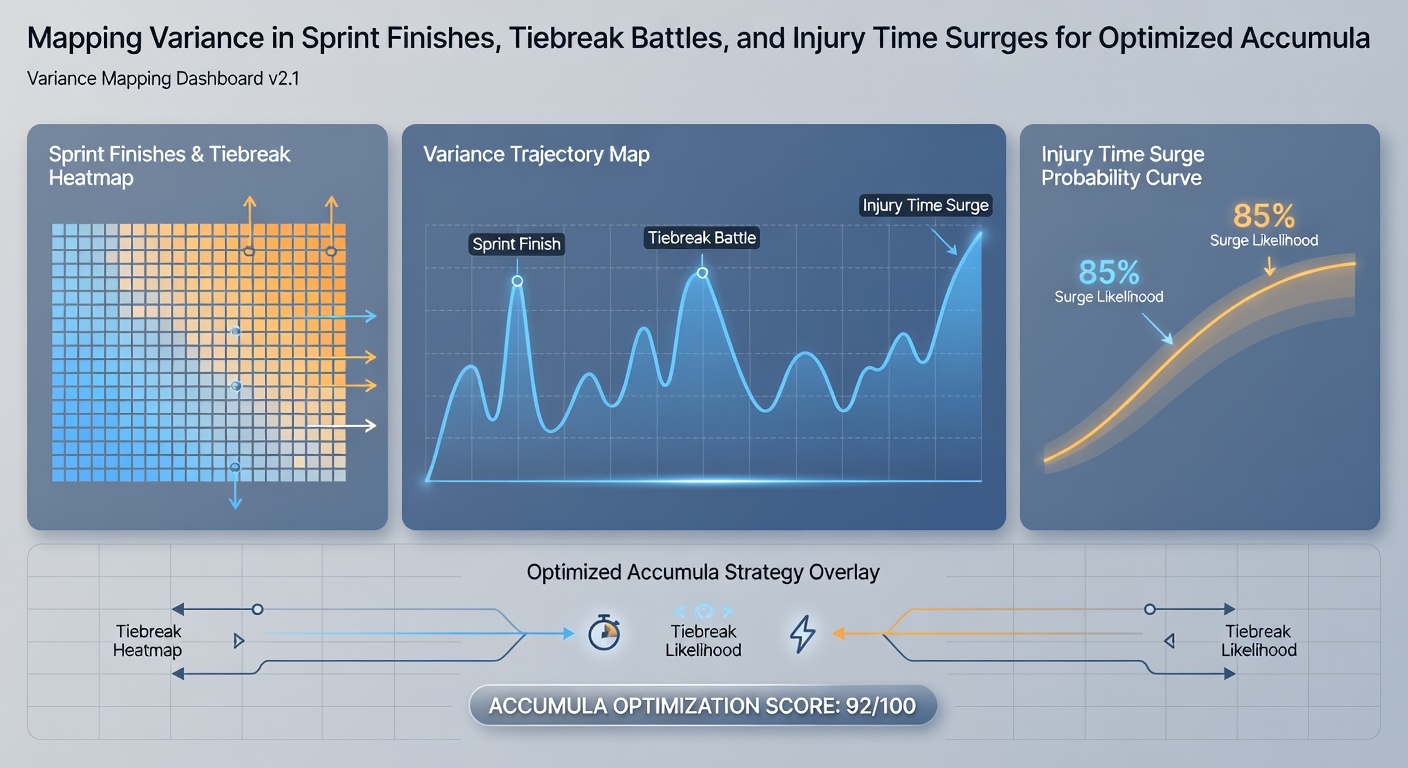
Specialized software platforms now merge variance coefficients from the three sports into unified scoring matrices, and operators report that May 2026 updates incorporated real-time sectional and timing feeds that refresh coefficients after each completed fixture or race. Constructors typically assign lower variance legs to early accumulator positions and reserve higher variance selections for later stages where payout leverage increases, a sequencing approach supported by back-testing across thousands of historical combinations. Data shared by university sports performance labs in Canada demonstrates that portfolios balancing one soccer injury-time selection, one tennis tiebreak leg, and one racing sprint-finish outcome achieve tighter overall return distributions than single-sport accumulators of equivalent length. Those who apply these mapped scores adjust stake sizes proportionally to each leg’s measured volatility, thereby aligning expected accumulator yields with predefined risk thresholds.
Practical Adjustments During Peak Fixtures
During congested May schedules that feature overlapping soccer, tennis, and racing calendars, variance maps undergo daily recalibration to reflect updated fatigue indicators and weather variables, and several European betting exchanges publish aggregated probability shifts derived from these recalibrations. Constructors monitor changes in injury-time goal frequency during evening fixtures, tiebreak lengths in day-night tennis sessions, and finishing burst times on varying turf conditions, then modify accumulator compositions accordingly. Evidence from North American gaming research centers indicates that such dynamic mapping reduces the incidence of extreme negative outliers compared with static selection methods. The resulting structures maintain competitive odds while distributing exposure across distinct variance bands that historical records show rarely align in simultaneous adverse directions.
Conclusion
Mapping variance across sprint finishes, tiebreak battles, and injury time surges supplies constructors with measurable inputs for refining accumulator architecture, and continued collection of sectional, point-by-point, and timing data through 2026 supports incremental model improvements. Organizations ranging from the European Professional Football Leagues Association to the ATP Tour and the Australian Racing Board continue to release datasets that feed these analytical frameworks, while academic groups supply independent validation of the resulting probability distributions. The approach yields accumulators whose risk-return profiles reflect documented statistical spreads rather than uniform assumptions across legs.